
A Strategy for Retention, Adoption, and Success
How can effective Customer Education increase the overall success of your business, beyond just the "user experience" of your product?
In this article, we'll:
- Redefine Customer Education from our work building out customer academy programs and product certifications for global SaaS and technology organizations.
- Highlight use cases for implementing Customer Education to achieve your unique goals.
This article is the first in a series on effective Customer Education strategies.
Subscribe to the Customer Education Blueprint to have this delivered to your inbox.
The Rise of Customer Education
If you've been on LinkedIn at all, you've likely seen the rise of Customer Education professionals, communities, groups, and content on topics like:
- supporting your learner through personalization
- AI and learning
- product training vs. job training
- certifications
- communities
- learning journeys
- "paid or free?" program debates
But Customer Education is more than a set of tactics — it's part of a broader Customer-Led growth model that impacts relationships and revenue.
Customer Retention vs. Acquisition
The premise of this guide:
Retained ARR > Leads.
In other words, for SaaS and B2B organizations, customer retention is often more valuable than customer acquisition.
This doesn't diminish the value of marketing and sales — instead, it highlights why Customer Education must be integrated across these teams.
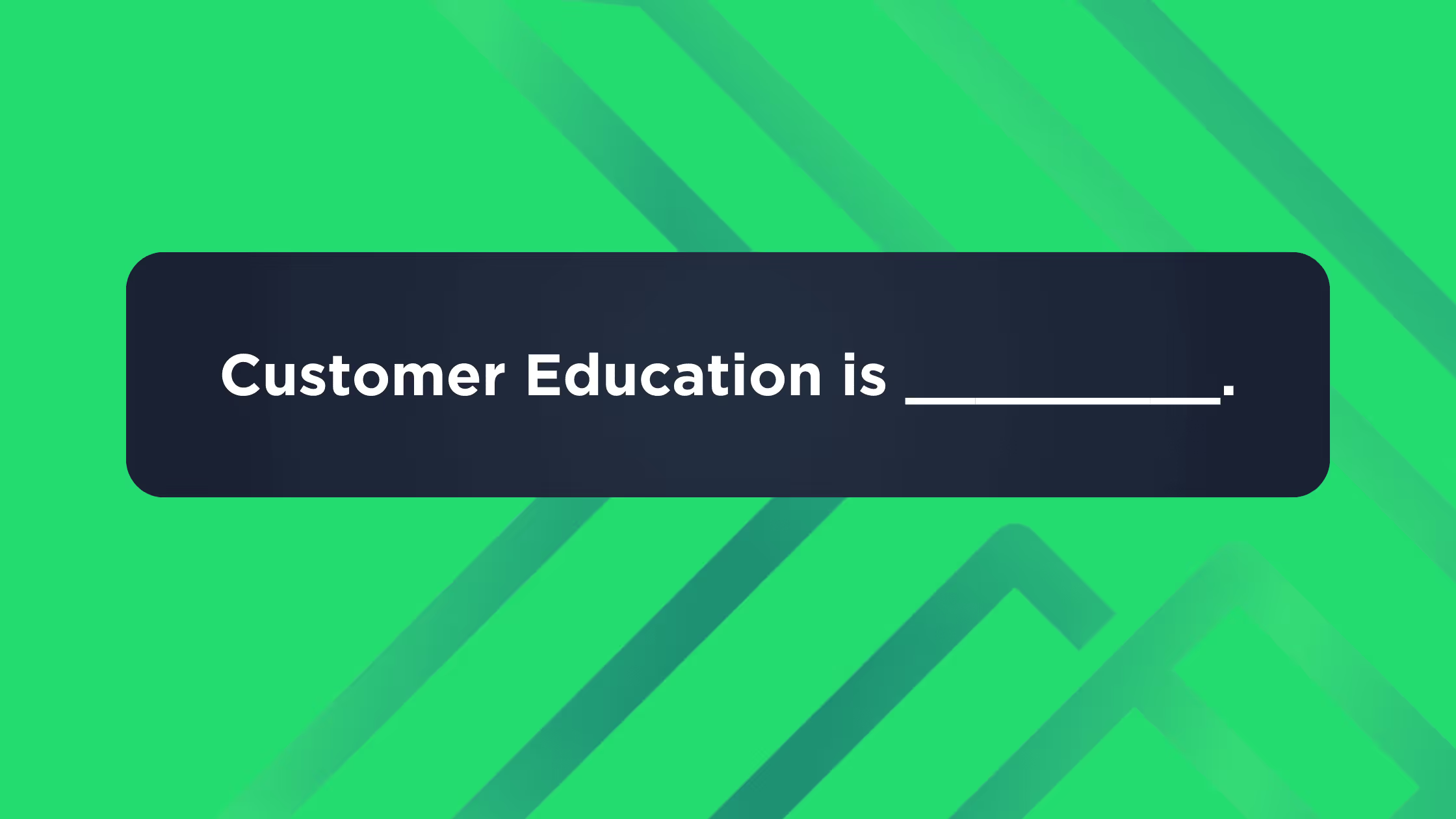
Before we explore strategy, we must define Customer Education.
Defining Customer Education
Customer Education is a framework shaping many customer interactions across the entire lifecycle. It's often grouped under Customer Success — but it's not only a CS function.
As cross-functional collaboration expands, what was once labeled "education" may become:
- marketing content
- sales enablement
- onboarding
- community engagement
- customer success operations
A clear definition of Customer Education ensures the team's scope is aligned with the company's goals.
What Others Say
WeSchool defines Customer Education as:
"A dynamic process that empowers users with the knowledge and skills not only to navigate product features but also to explore complex industry topics and solve day-to-day challenges."
Thinkific defines it as:
"The process of enhancing your customers' knowledge about your product or service to help them achieve value faster and better scale user growth."
The Customer Education Playbook describes it as:
Training clients and customers to extract value from the services companies provide.
These definitions are excellent. But through our work at ThinkThru, we've adapted them to fit the entire customer journey.
Our Definition of Customer Education
For this guide, we define Customer Education as:
Any educational activity that guides someone toward success in achieving their personal, professional, or organizational goals as a result of a relationship with your product or service.
Let's break down the important components.
"Any educational activity."
This expands Customer Education far beyond LMS modules:
- videos
- articles
- onboarding flows
- workshops
- certifications
- help centers
- community discussions
- advisory interactions
Anything that helps learners progress counts.
"Guides someone toward success."
Education isn't prescriptive — it's supportive.
It helps:
- current customers
- future customers
- leads
- fans
- partners
Everyone moving toward value realization is part of the education ecosystem.
"Personal, professional, or organizational goals."
People don't learn for your platform — they learn for themselves.
Motivations may include:
- becoming more effective
- saving time
- achieving KPIs
- career advancement
- earning recognition
- supporting their team
Your training should reflect these human motivators.
"Relationship with your product or service."
Someone doesn't need to be a paying customer to benefit from your education. They might be:
- evaluating your product
- comparing solutions
- researching the industry
- building expertise
- exploring career paths
Education builds trust across the entire funnel.
Why This Definition Matters
This broader definition of Customer Education:
- Expands Impact Beyond Product Training - You're not just teaching features; you're enabling success.
- Aligns Cross-Functional Teams - Marketing, Sales, CS, and Product can all leverage education.
- Creates Long-Term Value - Education builds advocates, not just users.
- Measures What Matters - Success metrics go beyond completion rates to outcomes.
Next Steps: Applying This Definition
In our next article, we'll explore how to map educational activities to different stages of the customer journey and identify gaps in your current strategy.
Ready to build a customer education strategy that drives retention and growth? Book a strategy call to discuss how we can help you design and implement an education program aligned with your business goals.